
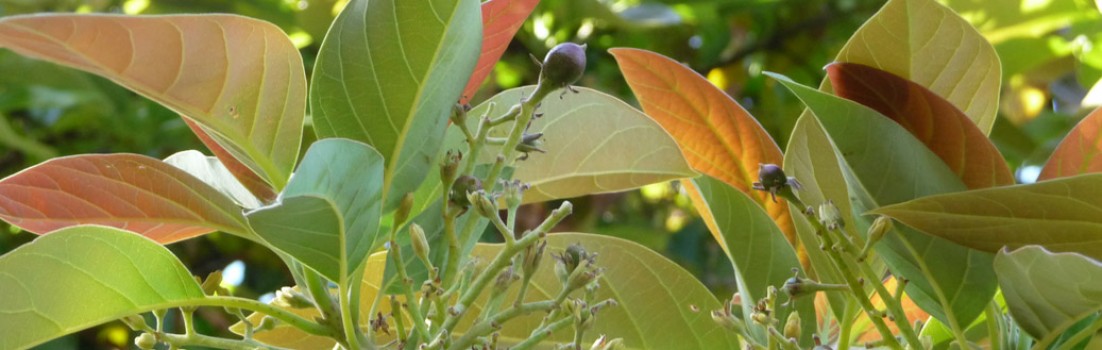


Spring has arrived here in Southern California, and that means it’s time to begin picking the avocados! The biggest avocados will be selected and harvested now to make room for the new babies to begin growing. The trees are already blooming, as you can see the shaggy yellow blossoms which make the trees look much lighter in color than the dark green leaves that are usually visible.
 After a long, dry winter we finally had some rain two weeks ago. Now the wild flowers are blooming! Without rain, the ground stays brown.
 When the buds for the blossoms begin to grow, the tree also starts to put out some new leaves. I like to think of those new reddish leaves as little umbrellas that will grow bigger and shade the new avocados from the sun.
 Here is the first flower opening! They look like tiny yellow stars. Did you know that avocado flowers are male or female when they first open, and on the next day when they open again they are opposite? Some flowers open male at first and then change to female. Others start out female and open again as male. Isn’t nature fascinating!
 The mature avocados have been growing for a whole year, and are still on the tree when the tree begins to bloom. Now is the time to begin picking the largest avocados so the tree will have energy to make the smaller avocados grow bigger, as well as set new fruit for next year.
 We’ll be picking some large and jumbo size avocados on Monday morning to ship directly to customers all over the United States. Our avocado mail-order website is CaliforniaAvocadosDirect.com where you can order a box of California avocados selected and picked just for you! Or send some California avocados as a gift to someone you love. We have both Fuerte and Hass varieties available now in the month of March.

Happy Spring to you! Enjoy the beautiful avocado flowers! (The bees are busy pollinating the flowers so that we can have delicious avocados next year. You can hear them buzzing out in the grove if you listen. bzzzzzzzzzzz)

4 Comments
Leave a reply →